
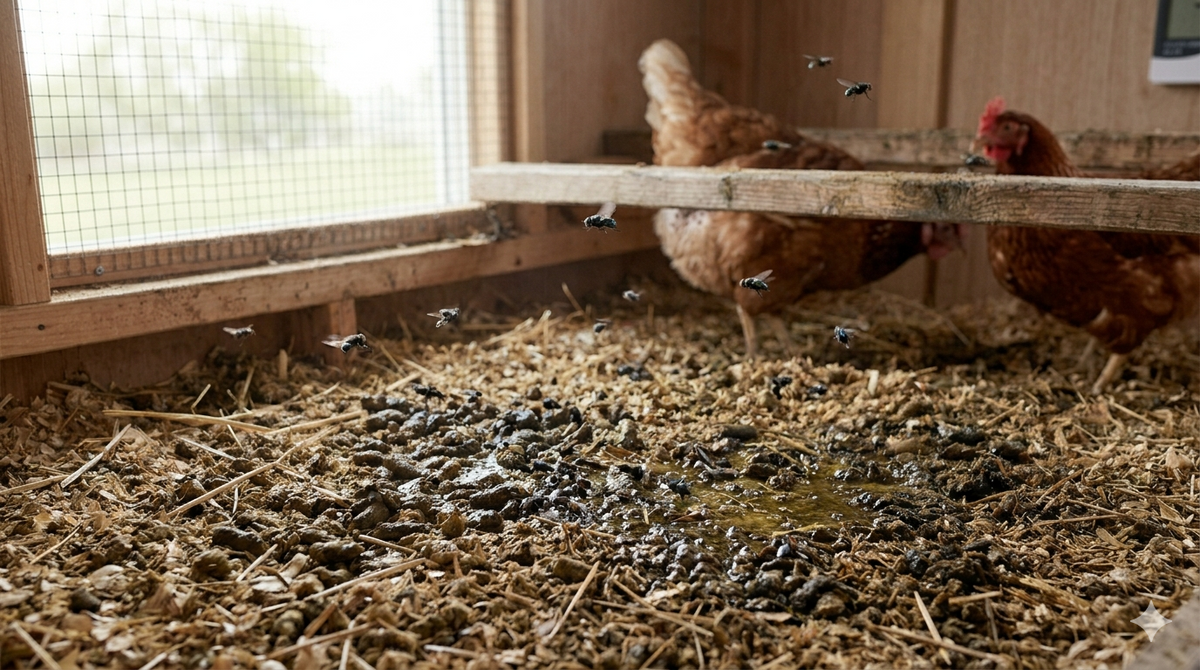
They cleaned the coop. You took care of it. It looks like the mites are gone. Three weeks later, your birds are scratching again, laying fewer eggs, and you might see hundreds of tiny red or brown mites on the roosts after dark.
It's especially annoying to deal with pests in a chicken coop when they come back. You didn't do anything wrong. It shows that most solutions fail to provide a reinfestation chicken coop solution, while eggs and larvae in cracks keep the cycle going.
This guide tells you why pests keep coming back and offers a guide for poultry pests reinfestation prevention to stop the cycle for good: The Amazing Doctor Zymes' Poultry Guard.
The Pests You're Most Likely Dealing With
It's important to find the pests before treating for reinfestation because each one has its own characteristics that make surface-only treatments hard.
Red Poultry Mites (Dermanyssus gallinae)
Red mite is one of the most common and harmful parasites in laying hen farms. They hide in cracks, joints, and holes during the day and eat your birds while they sleep at night. Because of this eating schedule, it's hard to catch and treat them. The coop can look clean during the day. People wake up at night.
Red mites feed on blood. Hens with a lot of parasites get anaemia, pale combs, low energy, poor laying, and death. Red mites will bite people who take care of chickens.
Females don't lay eggs on birds; they lay them in secret places. If you only treat the birds or the visible surfaces of the coop, the eggs will not be affected.
Northern Fowl Mites (Ornithonyssus sylviarum)
Red mites don't live on birds, but northern fowl mites do. They eat, lay eggs, and shed their skin on the host all year long. On the neck and head, around the vent, and under the wings.
Any treatment method that only works on the coop will fail because they live on the bird. Controlling birds effectively means taking care of both the birds and the environment at the same time.
Chicken Lice
Poultry lice eat dead skin cells, feather debris, and dried secretions. But parasites still stress birds out by making them itch all the time, damaging their feathers when they scratch and preen, and making them less efficient at eating because they have to deal with the parasites. Like northern fowl mites, lice reproduce on hosts, making it essential to learn how to stop chicken lice coming back naturally without harsh chemicals.
Flies and Fly Larvae
Coop flies are a secondary pest because they help control waste and moisture. House flies and lesser house flies lay their eggs in wet organic matter, like a coop floor that isn't cleaned. A lot of flies around can stress birds, spread diseases, and bring in predators. Maggots in manure raise the risk of ammonia and disease.
⚠ Most treatments kill adults, which is how reinfestation happens. Eggs last. New adults show up 7 to 14 days later. A cycle starts again. To stop reinfestation, you need to break the egg stage, not just the visible population.
Why Reinfestation Happens
Many flock owners find themselves in a constant battle with pests because traditional treatments focus only on the surface. Reinfestation is almost always caused by what those old-fashioned methods leave behind.

Chemical Resistance
For decades, synthetic pesticides like Permethrin and other pyrethroids have been the industry standard. However, mites and lice are incredibly adaptable. Over time, these pests develop a genetic resistance, essentially becoming "immune" to the toxins. This is why your treatment might work today but fail completely next season. Poultry Guard solves this by using a physical enzymatic action. Because it breaks down the pest's exoskeleton physically rather than chemically, mites can never develop resistance.
The "Egg Reservoir" in Hidden Cracks
Red mites don't live on the birds; they hide in the tiniest cracks of wooden roosts and nesting boxes. Most sprays and dusts simply cannot penetrate these deep crevices or, worse, they don't affect the eggs. When you kill the adults, the eggs stay safe and hatch 7 to 10 days later, starting the cycle all over again. Poultry Guard’s unique formula is designed to soak into these cracks and—most importantly—dissolve the protective protein coating of the eggs themselves, stopping the next generation before it hatches.
Only Part of the Environment Gets Treated
Red mites don't live on the birds; they hide in the tiniest cracks of wooden roosts and nesting boxes. Most sprays and dusts simply cannot penetrate these deep crevices or, worse, they don't affect the eggs. When you kill the adults, the eggs stay safe and hatch 7 to 10 days later, starting the cycle all over again. Poultry Guard’s unique formula is designed to soak into these cracks and—most importantly—dissolve the protective protein coating of the eggs themselves, stopping the next generation before it hatches.
Surface-Only Spot Treatments
A common mistake is only treating the birds or only the roosts. If you don't treat the entire environment, including the floor and wall joints, you leave "safe zones" for pests to survive. Poultry Guard is designed for a complete coop biosecurity approach, neutralizing pests on the birds, in the bedding, and within the coop structure simultaneously.
Litter and Moisture Issues
Traditional powders like Diatomaceous Earth (DE) become completely ineffective as soon as they get damp from waterers or humidity. This leaves your birds unprotected. Poultry Guard remains fully active regardless of the humidity level, ensuring constant protection even in the messiest coop conditions.

How Poultry Guard Breaks the Reinfestation Cycle

The Amazing Doctor Zymes' Poultry Guard is a food-grade pesticide that uses enzymes to kill pests. It is made for cows and chickens. It kills adults that can be seen and takes apart facilities that help populations grow back to stop reinfestation biologically.
Enzymatic Contact Kill — Adults and Nymphs
When red mites, northern fowl mites, chicken lice, and flies touch each other, Poultry Guard's enzyme system breaks down their exoskeletons and membranes. Disruption of the body happens right away, without any harmful chemicals. It affects both hard-bodied insects and soft-bodied parasites.
Enzymatic mechanisms lack a resistance pathway, in contrast to chemical mechanisms. Mite populations can't get used to Poultry Guard the way they can to synthetic insecticides. The same formula works for every season and every application.
Egg Casing Breakdown
This is the main benefit of Poultry Guard over other treatments. The enzyme system breaks down the protective protein structure of parasite eggs, which stops them from growing and hatching. It gets rid of the egg reservoir that makes the whole coop, including cracks, crevices, and nest boxes, reinfest.
The population can't grow back on its 7- to 14-day cycle when you handle the eggs, adults, and nymphs. The breeding base gets smaller with each treatment until the infestation is gone.
Ammonia and Odor Neutralization
Poultry Guard also controls ammonia, which makes pests in the coop more of a problem. When manure breaks down, it releases ammonia, which can harm birds' lungs and make the air warm and full of nitrogen, which is good for flies and mites. Enzymes break down organic molecules in manure that make ammonia, which makes the smell less strong and the conditions better for pests.
Safe for Birds, Safe for Eggs, Safe for Keepers
All of the ingredients in Poultry Guard come from plants, are safe to eat, and break down naturally. You can use it on coop surfaces, roosts, nest boxes, and floors without hurting birds or managers. Just spray it on feathers and skin. There is no time to withdraw eggs. Birds can lay and collect eggs without worry after therapy.
✔ There is no time between entries. No withdrawal of eggs. No need for protection. Use safely with birds in the coop.
Step-by-Step Coop Pest Elimination and Prevention Protocol

This method will get rid of an infestation and keep it from coming back.
Phase 1 — Initial Deep Treatment (Week 1–2)
Goal: Get rid of adults and mess up the egg cycle in the whole coop.
- Mix ratio: For active infestations, mix 30–40ml of Poultry Guard concentrate with each litre of water. Use a pump sprayer for deep coverage.
- Bird treatment: Spray and rub the solution into the feathers and skin. Northern fowl mites and lice like to live in the vent, under the wings, on the neck, and on the head. Use the evenings when the birds are calm and resting.
- Coop surfaces: Clean the floors, walls, nest boxes, and roost bars. Use the spray to push the solution into cracks, joints, and crevices where red mites breed. Don't forget to clean the backs of perch boxes or the undersides of the perch.
- Deep litter and floor: Clean the floor and bedding. This includes larvae of flies and ground mites.
- Frequency: Give every five to seven days. This rhythm stops the time between applications when eggs hatch and reproduce and the population grows.
Phase 2 — Follow-Up Treatment (Weeks 3–4)
Focus on getting nymphs to hatch from the first treatment cycle and lowering the number of them.
- Mix ratio: 20–25ml per litre.
- Application: Keep treating the birds and the coop. At this point, you should see less pest activity. Cover the whole area to catch any egg hatches that are still going on.
- Monitoring: Check roosts at night with a torch for red mites. Check the birds you handle every week for lice and fowl mites. In week four, the population should be almost zero.
- Ammonia management: Poultry Guard once a week in areas where new litter and manure build up to keep ammonia levels in check. Fly breeding conditions are removed, and ammonia levels are lowered.
Phase 3 — Ongoing Prevention
Goal: Keep bugs out and stop them from coming back.
- Mix ratio: 15ml per litre for maintenance applications.
- Bird treatment: Spray birds every two weeks to keep them from getting sick. Before adding new flock members, they need to be treated first.
- Coop treatment: Spraying the coop's surfaces, roosts, and nest boxes once a week. Pay attention to cracks and crevices where red mites can hide. Monthly deep treatments at 30ml per litre should start each season.
- Seasonal note: Mite pressure goes up when it's warm. Therapy in the summer should happen twice a week. During the peak of fly activity in the middle of summer, increase the frequency of floor and litter treatment.
Frequently Asked Questions
Is Poultry Guard safe to use while birds are in the coop?
Yes, Poultry Guard is safe for poultry when used at the right dilutions and is made from food-grade, plant-based ingredients. You can put it right on birds and the surfaces of their coop with the flock. There is no need to remove the birds or wait before treating them. The keeper and the flock have a lot less stress during treatment.
Does treatment affect egg safety or quality?
No. Poultry Guard does not harm eggs or animal tissue. There is no withdrawal period, so eggs laid after treatment are safe to eat. This is one of the best things about it for people who own backyard flocks or small-scale egg farms and can't afford to have their pest control work stop.
How do I know if red mites are the problem versus other parasites?
You can see red mites easily at night. At night, use a torch to look for red mites on the undersides of roosts and nest box joints. There will be little black or reddish-brown spots that move. You can see small moving dots by running a white cloth along a roost bar. Handling birds during the day shows northern fowl mites and lice, which is the first step in learning how to get rid of mites on chickens effectively. Look for moving bugs or white egg clusters on the shafts of the feathers around the vent. Use the whole coop and bird therapy to treat both kinds of sickness.
Can Poultry Guard also control flies in the coop?
Yes. Enzymes kill fly larvae in manure and other wet organic materials, and they also kill adult flies when they touch them. Applying it to the floor, bedding, and places where manure builds up stops flies from reproducing by breaking down the organic material that larvae live in and killing both larvae and pupae. The coop becomes less appealing to laying flies when ammonia levels go down, which makes it harder for fly populations to survive all season.
How quickly will I see results after starting treatment?
Most flock keepers notice a big drop in the number of mites and lice within 48 to 72 hours of the first full treatment. Following the above plan, it takes two to four weeks of regular treatment to completely get rid of the population, including the egg cycle. Treatments that are spaced out more than the hatch cycle let the population partially regrow between treatments, so consistency is very important. If you stick to the schedule, your results will get better with each session.
The Cycle Stops When You Address the Full System
Most treatments only kill adults that you can see, leaving behind eggs and larvae that make the next generation, so pests come back. There is nothing wrong with your approach. This is a limit for most things.
Poultry Guard filled in the gap. Contact kill with enzymes. Breaking down the eggshell. Get rid of ammonia. Birds can use it safely. Safe for eggs. No resistance. A full system for birds, coops, and the world around them.

Leave a comment
This site is protected by hCaptcha and the hCaptcha Privacy Policy and Terms of Service apply.